The better Microsoft 365 for private clouds.
Nextcloud offers numerous advantages for companies and organizations. It enables structured collaboration by making it easy to share files with teams, partners or customers. Thanks to integrated collaboration tools, content can be edited in real time, which significantly speeds up coordination processes. In addition, flexible rights management ensures that sensitive data remains protected and only authorized persons are granted access. Another plus point is its customizability. Nextcloud can be individually adapted to different requirements and seamlessly integrated into existing systems.
Three reasons why Nextcloud is recommended
Firstly, the high level of data security thanks to self-hosting and compliance with European data protection standards.
Secondly, independence from large cloud providers, allowing organizations to retain full control over their data.
Thirdly, the individualization and scalability. Nextcloud grows with your requirements and is suitable for both small teams and larger companies.
At MD Systems, we use Nextcloud successfully and are happy to advise you on finding the right solution for your collaboration and administration. So that you too can obtain a suitable tool for your administration. Get in touch with us.
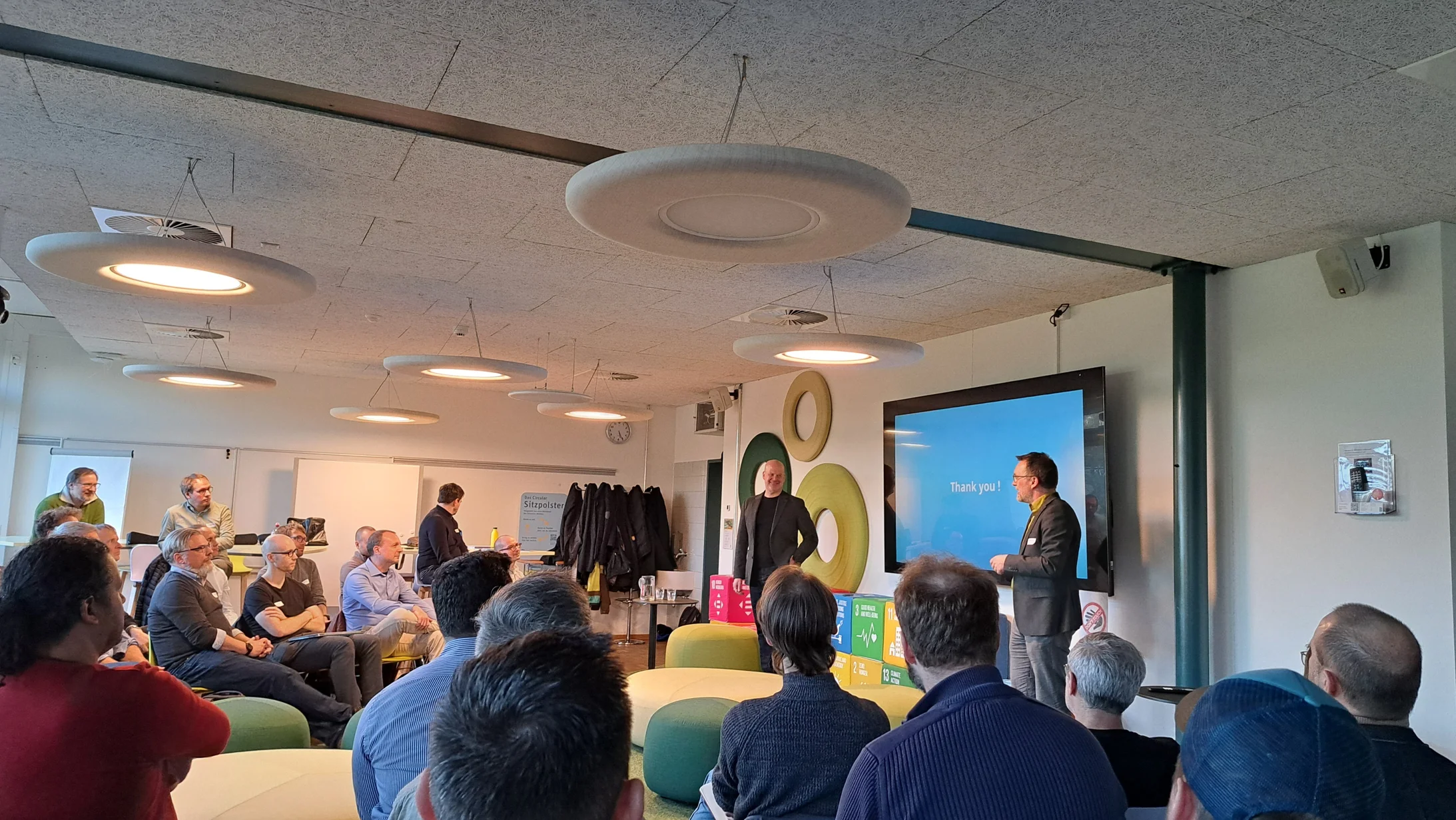
Digital Sovereignty with Nextcloud, Event from 25.02.2026
At Bern University of Applied Sciences, we enjoyed a presentation by Frank Karlitschek, the founder of Nextcloud. He founded the company in 2016, having previously been involved in the open source platform ownCloud. His aim was to create a secure and transparent alternative to proprietary cloud services.
Nextcloud is closely linked to the concept of digital sovereignty. This refers to the ability of companies and organizations to retain full control over their data, processes and IT infrastructure. Especially in times when many cloud solutions are operated by international corporations, this topic is becoming increasingly important.
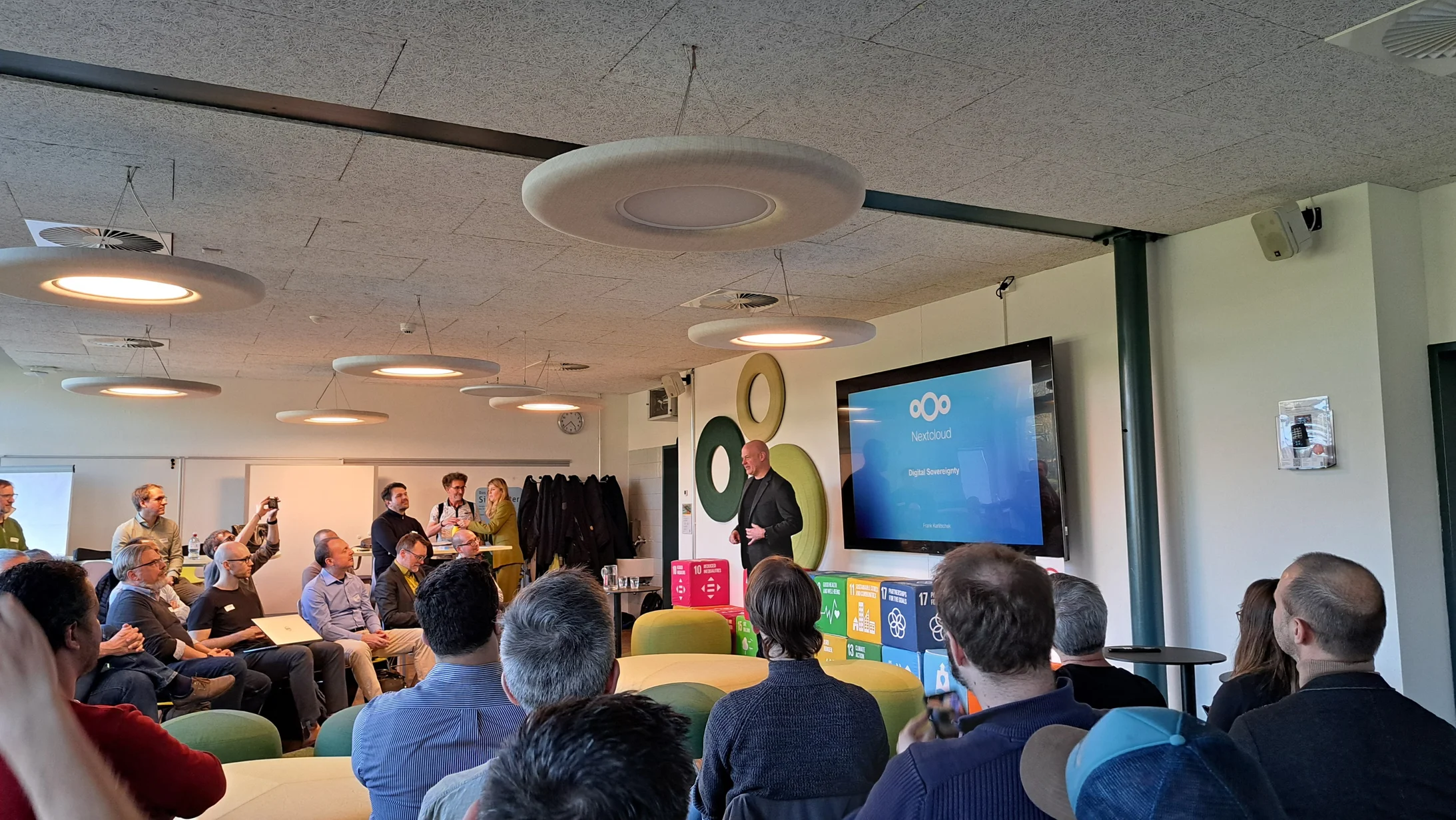
Nextcloud strengthens digital sovereignty by giving organizations full control over their data, systems and processes. The platform can be operated either in the company's own data center or with trusted European providers. This means that sensitive information remains within the organization's own sphere of influence and is consistently subject to the applicable local data protection regulations, such as the GDPR. Companies and public institutions decide for themselves where their data is stored, who can access it and how the infrastructure is designed, which is a key component of genuine digital self-determination.
As open source software, Nextcloud follows the four fundamental freedoms: The freedom to use the software for any purpose, to understand and study it, to modify it, and to redistribute it, with or without customization. This openness creates transparency and trust, as the source code can be checked at any time and there is no dependency on individual manufacturers. At the same time, it enables flexible adaptation to individual requirements and long-term independence.
Security is not left to chance, but is guaranteed by continuous updates, an active developer community and professional development and testing processes. Regular security checks, rapid response to vulnerabilities and clearly defined release and maintenance processes ensure that the platform can be protected and operated reliably in the long term.
For companies and organizations, this means that they can manage customer projects securely, guarantee data sovereignty and become less dependent on large cloud providers. It is precisely this combination of control, security and flexibility that makes Nextcloud an important building block for digital sovereignty.