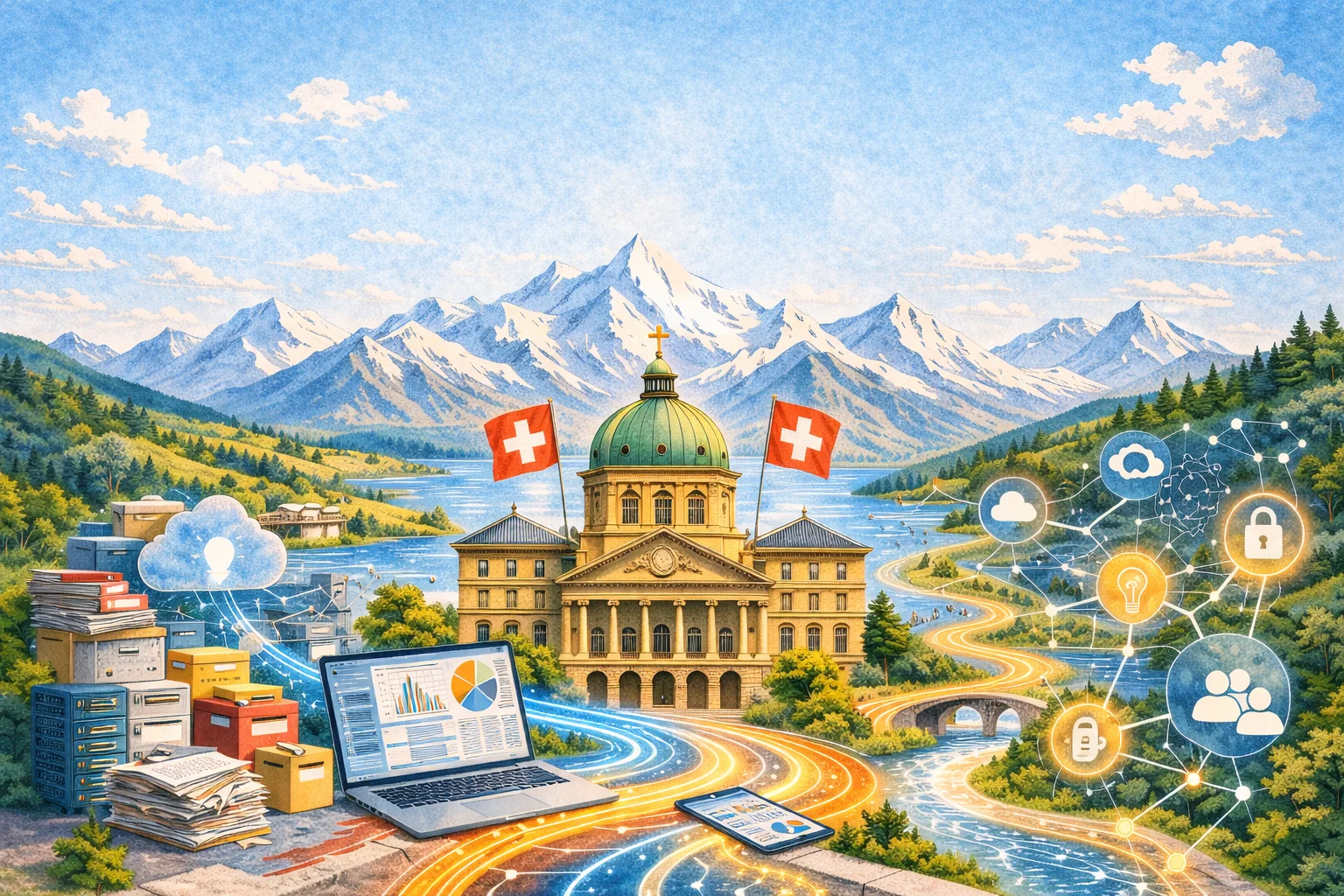
The discussion about digitalization has now gained significant momentum in many Swiss associations. While the focus in recent years has primarily been on modern websites, new communication channels and more efficient member management, another topic is now moving more into the spotlight: consistent digitalization of the data landscape.
It forms the basis for many of the changes that associations are striving for today, from better services to well-founded strategic decisions.
While the first step was often to digitize processes in the first place, today it is increasingly about structuring, linking and making data usable along clearly defined quality standards and integration processes. This is precisely where many organizations in Switzerland are still at the beginning.
Data as a strategic resource
In many associations, data has grown historically. Member information is stored in different systems, sometimes even in tables or individual stand-alone solutions. Event data, newsletter subscribers, project information and contact lists are often managed separately.
This fragmentation not only makes the day-to-day work of the offices more difficult, but also prevents a holistic understanding of their own members. If you don't really know your members, it is difficult to recognize their needs. Accordingly, they can only develop suitable offers to a limited extent.
It is important to identify the most valuable data sources, integrate them seamlessly and thus create an ecosystem that brings real benefits.
Quality before quantity. Not all data is equally valuable. It's about prioritizing the relevant sources and bringing them together in a coherent system. This is the only way to create real added value for organizations and members.
Better member satisfaction through better data
Members' expectations have changed significantly in recent years. People are used to digital services that are personalized, quick and easy to access. This experience is also shaping expectations of associations.
If members have to enter their data multiple times, information is difficult to find or communication seems uncoordinated, frustration quickly arises. A consistent database, on the other hand, enables a more targeted approach, personalized content and more efficient processes, for example for events, further training or information offers.
For associations, this means Data is not just an administrative tool, but a central component for maintaining member relationships.
Efficiency in the office
A structured database can also provide considerable relief internally. Many offices today work under high staffing pressure. Vacancies, staff turnover and increasing demands mean that teams with limited resources have to cope with more and more tasks.
Sophisticated digitalization helps to reduce manual processes and make information available and visible more quickly. When systems are connected and data is maintained consistently, many processes can be automated or at least significantly simplified. This leaves more room for strategic tasks and active member support.
Foundations for new technologies
Another important aspect concerns the use of new technologies. Many expectations are currently arising in connection with artificial intelligence in particular. Automated responses to member inquiries, intelligent evaluations of trends or support with communication are just a few examples.
However, such applications only work on the basis of high-quality data. Incomplete, outdated or contradictory data sets quickly lead to incorrect results and undermine trust in new technologies.
This is why a clean, integrated database is a prerequisite for any successful digitalization.
Challenges along the way
However, the path to a modern data structure is not just a technical task. It also involves organization, culture and working methods. Existing systems need to be reviewed, processes adapted and responsibilities clearly defined.
At the same time, there needs to be a common understanding within the organization of why data maintenance and data quality are important. This change can be particularly challenging in associations with a militia structure. Many processes have grown historically and are strongly influenced by individuals. Changes must therefore be carefully monitored in order to create acceptance and incorporate existing knowledge.
Digitalization as an opportunity
Despite this challenge, digitalization offers a great opportunity for Swiss associations. It enables them to strengthen their own role in an increasingly digital society.
Those who use their data intelligently can understand their members better, develop offers in a more targeted manner and make internal processes more efficient. At the same time, the association will be able to connect to new technologies and future developments and create real added value for its members.
The key question is therefore no longer whether associations should engage with digitalization, but how they should approach this process strategically. The future of association work will depend heavily on how well organizations understand, maintain and use their data.