Conference for Digital Sustainability was founded in 2016, so next year we will be celebrating its 10th anniversary.
Open source is more than just code - it's a culture. It's a movement driven by collaboration, transparency and creative freedom.
Digital sustainability ensures that digital goods such as data, software and content bring long-term social and environmental benefits.
It ensures that digitalization not only progresses, but is also sustainable and accessible.
In Switzerland, this affects many areas such as digitalization policy, data protection, copyright and technological developments such as open data and blockchain. DINAcon addresses these topics and offers a compact overview of the currently hotly debated and important events and innovations in the open source environment within one day.
You will meet an inspiring network of over 250 guests and opinion leaders from IT, communities, administration, politics and civil society - a place for exchange and new impulses. In around 40 exciting presentations on the latest open source technologies, applications, infrastructures and legal developments, you can learn more and be inspired for your own projects. Experience digital sovereignty and discover the latest security and data protection technologies - and find out how you can strengthen your digital autonomy. The event is usually concluded with an aperitif and a hack night, so you can experience digital sustainability in practice.
MD Systems has been involved in the organization of DINAcon for five years. This year, we were again involved in planning the event program as track chair for administration (together with Matthias Günter) and in designing the panel. The DINAcon conference is organized by the CH Open association and partner organizations such as DIN, Swiss Data Alliance and Parldigi support the organizing committee with up-to-date content. They also provide high-caliber speakers from politics, science and the private sector. The DINAcon conference is the result of the hard work and great passion of dedicated OC members, seven in total.
DINAcon 2025 panels
This year, it was important for us to highlight the tension between pure Swissness with absolute control and the added value of international collaboration in the panels.
In 2021, the European Commission analyzed and acknowledged the value of open source for the European and national economy in a study. The study demonstrated the immense impact on GDP, innovation and technological progress. The pursuit of digital sovereignty in recent years has accelerated the introduction and development of new policy instruments designed to harness open technologies for the benefit of European and global citizens, businesses and public services.
How do control and autonomy intersect with openness and collaboration?
How can European and national policies promote open source globally? Is there not an inherent conflict of interest here?
What lessons have been learned in terms of public investment and policies to support open technologies?
What mistakes should be avoided and what promising progress has been made in the strategic use of global open technology know-how?
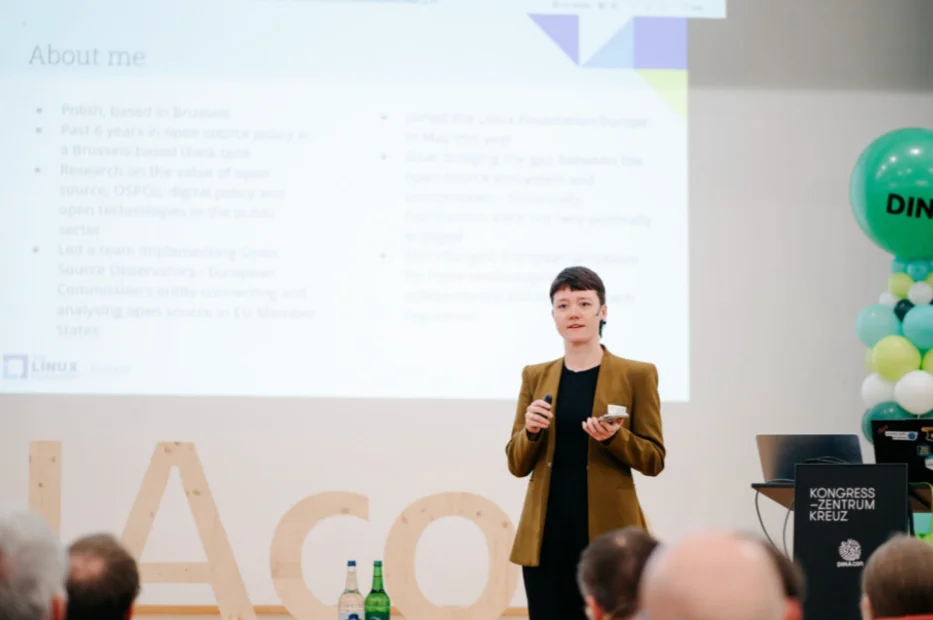
The bridge between policy and code: Why service companies are the cornerstone of digital sovereignty
This keynote offered an institutional view of digital sovereignty, highlighting the often overlooked role of FOSS-oriented service companies that work exclusively with governments. Although FOSS specifications and guidelines for public code are gaining momentum, these efforts often fail without a sustained commitment from those who actually build, customize and maintain the public infrastructure.
This talk also highlighted how mission-driven capital, including catalyst and evergreen investors, supports these ecosystems, enabling sustainable infrastructure without exploitative exit strategies.
Governments are increasingly embracing open source policies, but who will ensure that the systems developed today will still be serving the public ten years from now? This presentation argued that FOSS-oriented service companies are not only implementers but also long-term stewards of digital public infrastructure. Using examples such as Red Hat's acquisition of Cygnus, Estonia's federated stack and companies such as Liip, Linagora, Camptocamp and CivicActions, this session explores how digital sovereignty depends on trusting relationships, an open culture and sustainable capacity. It also highlights how mission-driven, catalytic capital is increasingly supporting these ecosystems, signaling a shift from short-term solutions to long-term public benefit.
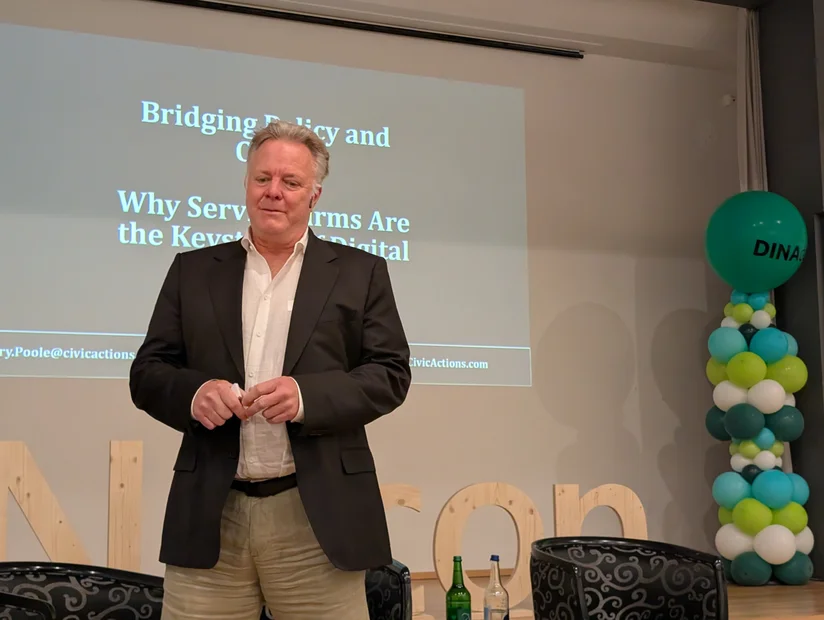
The mobility of the future is networked and intelligent. This connectivity will not happen on its own. The digital transformation of the transport sector brings with it great opportunities: increased efficiency, sustainability and new business models. At the same time, technological complexity, regulatory requirements, data protection issues and the fragmentation of the stakeholder landscape pose considerable challenges for the industry.
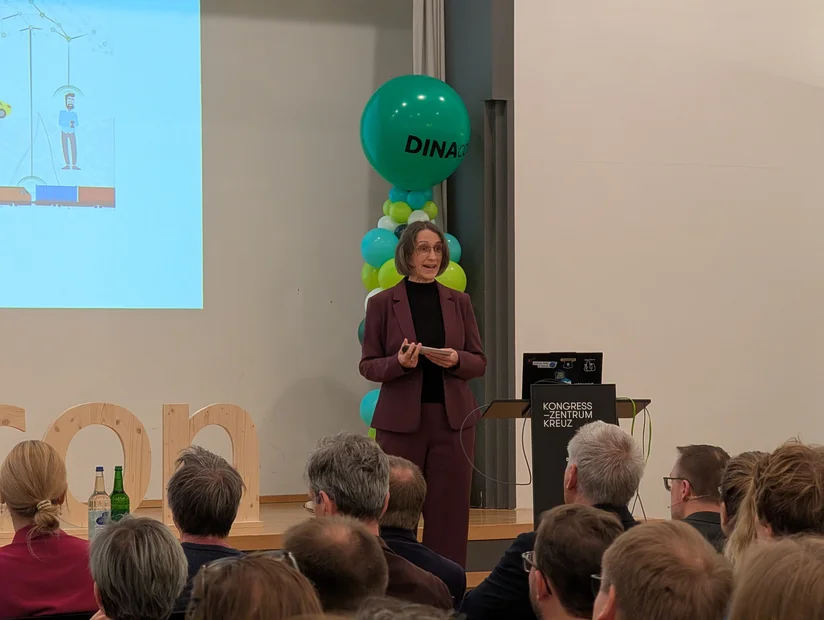
In her keynote speech, Petra Breuer shed light on the vision of connected mobility and explored what role the MODI can play on this path. What does it take for MODI to act not just as a technical foundation, but as a real enabler for innovation, intermodality and sustainability? What responsibilities do business, politics and research have - and how can cooperation be rethought?
Using concrete fields of action and practical examples, Petra Breuer showed what is important now: a common understanding, a coordinated approach and the will to work together to make MODI successful and sustainable.
Our contribution to this year's DINAcon
We have dedicated our slot to art and why it inspires us to collaborate. Music has always been a driver and motivator for Miro Dietiker, founder of MD Systems. For this slot, he sat down and wrote an entire music album with the help of several tools. All the overwhelming global crises and the increasing pace of technology have forced him to take a conscious break and music has emerged from this.
Stay open
Music knows no boundaries - and neither does open source. In a world where technology and reality are often separated by barriers, this album celebrates the universal power of collaboration with every song.
To the album
The opening song of the album "Open Source Groove" stands for a new era of creative freedom. The song is a tribute to the open source community, which is characterized by openness, transparency and shared progress. The song reminds us that the best solutions are created when we share, improve and grow together.
Like music, open source is a cultural asset and in this album Miro Dietiker has musically expressed the diverse perspectives of open source. From idealism and pragmatism to resistance and transformation, everything is reflected in the songs.
Each track offers a different perspective on the challenges, values and human destinies within the movement. This project blends spoken word, rhythm, melody and message to inspire, reflect and unite.
Tracks that are not only about open source, but are also produced and shared in the spirit of open source: Remixable, forkable, collaborative. This is not just an album. It is a statement.
The creative process
Creative processes always start in the same place. In overload, chaos or an almost unsolvable question. In order to create an idea from the chaos, you have to change your perspective and distance yourself from the topic. The easiest way to do this is by "letting yourself drift", being open to inspiration and having the courage to try out new things without a specific goal. The process is very psychologically rooted and requires us to look honestly at our fears, be prepared to break our own rules and reawaken our childlike curiosity. Once these "inner processes" have been successfully completed, the process can begin. The idea is formed and a channel can be found.
For Miro, the communication channel was defined quite quickly, because music may convey many things and the artistic process mirrors the universes of open source wonderfully.
Realization phase
What options are there for creating a music album? The versatile AI tools open up new ways of tackling a complex topic. But what kind of tool do you need and what should it be able to do? When choosing an AI tool, it is important to be aware of what the tool needs to be able to do.
For this music project, it was important to combine different musical styles, generate meaningful lyrics around open source and define supporting voices. This was achieved by combining several AI tools.
Process procedure, criteria
Album:
- Define album topic
- Collect ideas and bundle existing ideas
- In-depth research for further perspectives: personas, roles, people
- Determine songs for the theme, develop ideas for tracks
- Define specific meta-themes
- Avoid overlaps
- Determine different perspectives
- Vary personas and facets
Individual song / track by track:
- Song idea
- Integrate different ideas
- Research music style, listen to other songs and then define your own style
- Create different lyrics and then select them
- Develop storyline
- Determine verse level, incl. level paragraphs
- Fine-tuning (this feels like it takes the longest) the rhyme, rhythm and flow of the song, coordinating the verses and the vocabulary used
Produce, iterate, refine the prompt step by step
Is this art or can it go away?
Insights into the presentation
What have we learned from this?
The creative process is an examination of oneself and has a therapeutic effect, and clarity is created through reduction. Music as a result motivates and has a lasting effect long after the actual creative process. Here is a short list of the difficulties within a music project with the support of an Ai.
- Copyright pitfalls - band name, artist name, lyrics
- Fight against genericity - empty phrases and ChatGPT language
- Ai is a mirror of the defined task, so provide sufficient context
- Ai can also be used to develop a task, because a clear task (idea generation) is central to a great result
- It is important to find the balance between being too specific and too vague - define the space that Ai can fill
- Be prepared to throw everything you have created overboard, delete it and start from scratch - don't give up
- Try out different possibilities in parallel and switch as soon as you get stuck and no immediate solution emerges
- German is very difficult to implement, English is easier
Working with the language strengthens the language as a tool: sharpen your understanding of terms and statements.
LIVE appearance at DINAcon 2025
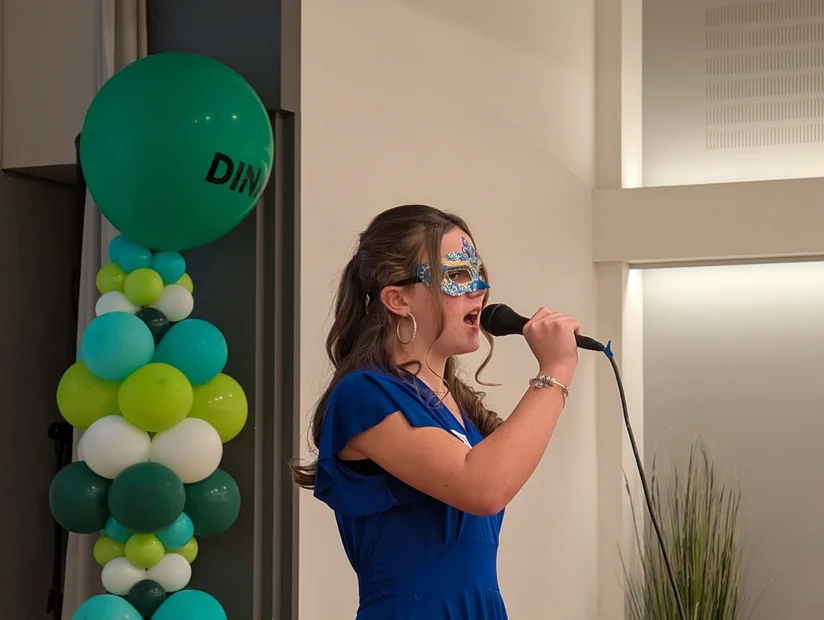
Sophie Dietiker is a pupil at the 1st secondary school and an enthusiastic singer. Music has always been a part of her life, whether in the choir or in individual singing lessons. Sophie has been honing her voice for three years and her musical journey has already taken her to small stages. She lives her passion for music with a lot of energy and joy. AI is the logical support for her to live her dream.
With fresh melodies and catchy lyrics, Sophie Dietiker combines the philosophy of Open Source with the emotional language of music.
Sophie Dietiker's performance at DINAcon 2025 of the "Open Source Anthem" was a rousing invitation to live the values of open source. With an energetic voice and modern pop sound, she gets to the heart of the message: "In the beginning / All the code was free". This is a call to preserve the origins of digital freedom. The song tells of the power of community, of shared skills and the conviction that openness shapes the future.
The catchy hooks such as "Open up / Don't lock it down" and "The open future is here to stay" invite you to sing along, while the chorus "Collaborate / It's what we do!" sums up the essence of open source.
With a mixture of youthful vigor and musical maturity, Sophie shows how music and technology can build bridges. Whether in the verse "Fix the bugs through the night" or in the powerful outro.
"The open world is our legacy!" - the song is an appeal to share knowledge, break down barriers and create something new together.